Showing posts with label Nepal. Show all posts

Saturday, January 15, 2011

Henna Application


For those of you phyto-philes out there,  I have a question for you... What is the source of the dye used in the temporary "tattoos" known as henna and also commonly used to dye hair and fabric?

The beautiful henna designs, prior to removing the paste.

Drum roll please... It is Lawsonia inermis. "Henna" also happens to be the common name for the plant, and, in case you wondered, it is the leaves that are used to make the dye.  This plant is a member of the family Lythraceae along with some other well known plants such as crepe myrtle (Lagerstroemia) and purple loosestrife (Lythrum salicaria).
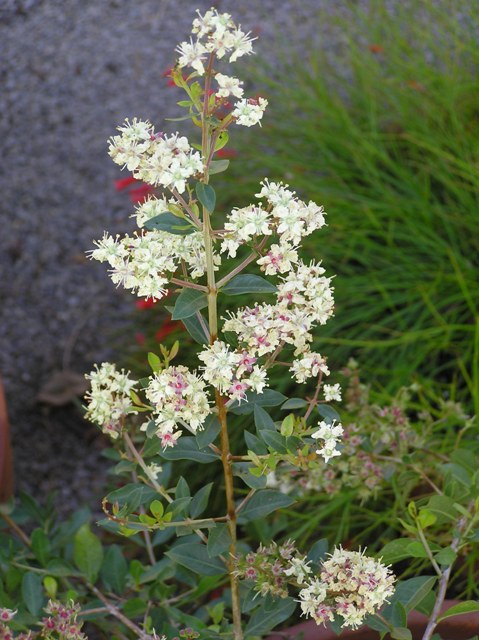
Lawsonia inermis in flower.


Upon our return from the day's exciting adventures, we entered the bride's family home to see a henna artist applying the highly valued dye paste to Junni's forearm. The henna skin decorations are traditionally applied to the hands and feet of a bride and other women in the bridal party prior to the wedding (a ceremony known as "Mehndi" or मेहँदी in Hindi). In this case, it was Junni, her sister, mother, and aunt...

The talented artist applying the intricately patterned designs.

The paste is brownish-green in color when it is applied. After it dries, it is allowed to set for a few hours (3-6 at least, but more than that is not uncommon); the longer it sets, the deeper and more intense the color of the stained skin becomes. When Junni's henna artist gave the cue, the dried concoction was scraped away with a dull knife. Junni was careful not to bathe or wash her hands for about a twenty-four hour period, so that the stain could penetrate further. When the paste was first removed, the stain was light orange in color but it continued to darken over the next day or two until it was a deep reddish-brown.

After the paste was removed... notice the darker palms.

According to Wikipedia, the colorant of henna, lawsone (or hennotannic acid) reacts chemically with the protein in skin and hair (keratin) to produce a permanent reddish-orange stain that lasts until the cells are shed. The color is most intense and longest lasting on the palms of the hands and the soles of the feet because the skin is thickest in these areas and it is therefore able to bind more pigment (lawsone)... Since Mehndi ceremonies are family events, this post wouldn't be complete without a picture of the bride's favorite nephew!

The bride's nephew, Masku!


Tuesday, January 11, 2011

Nepali Cuisine -Part 1

Well if anyone knows me and my appreciation for food, this post must come as no surprise... After exploring the Godavari Village Resort, we stopped to enjoy a wonderful dinner at the resort's restaurant with sweeping views of the valley below and the enchanting Himalayan range above... The restaurant specializes in traditional Nepali and Indian cuisine, and from what I sampled, it was well worth the trip=-)

Look close... can you see the mountain peaks?

The valley of terraced rice fields... with a brick factory in the distance...

Even in the haze, the Himalayas make their mark!

Some pictures of the dishes we enjoyed follow... "Khasi ko chhoila" was charcoal marinated mutton flavored with traditional Nepali herbs and spices. For those curious minds, "khasi" (खसी) means mutton, or, similar to the meaning of 'steer', specifically refers to a castrated goat... All the same, it was quite good...

Khasi ko chhoila...

My favorite dish was "aloo ko achar" (also romanized as "alu ko achaar"). "Aloo" (आलु) means potato and "achar" (अचार) means pickle... The English translation of the dish's name as found in the restaurant's menu was "homemade marinated tangy pickle" and it was a fitting description. The dish had an initially intense, tart flavor, which lingered for a bit before being followed with a burst of spicy heat to nicely complement the acerbity.

Aloo ko achar... yum!

A Western-inspired dish: 'sizzling chicken'

Momo (म:म) is a type of stuffed dumpling similar to Chinese jiǎozi (饺子) or potstickers. Originating in Tibet and later migrating into Nepal, the momo has since been adopted by many of Nepal's ethnic groups as a staple in their own cuisines. In fact, Junni explained that momo is, in many ways, the national dish of Nepal. Stuffed with meat (frequently yak, water buffalo, goat, chicken, or pork), momos are commonly sold in the streets as a fast food of sorts...

Momos with dipping sauce...

Mo' momos!

Saturday, January 8, 2011

Godavari Village Resort

Our next destination was the lovely Godavari Village Resort, not too far from the botanical garden in Godawari, Lalitpur.

The sign that indicated we were almost there!

This beautiful resort was built by and is owned/operated by a close friend of the bride's family. It was constructed with traditional Newari architectural details, such as the intricately carved wooden windows, balconies, and doorways. The accommodations are nice with numerous cottages and several larger buildings. The grounds are replete with well-kept gardens and horticultural displays, and the whole property overlooks a visually inviting valley with terraced rice paddies amidst stunning viewsheds of the mighty Himalayas in the background.

The front entrance gate...

There were not too many tourists or patrons while I was there, perhaps due to the stigma associated with traveling in Nepal following the civil war and recent political strife. However, this fact made the place even more magical, since we had it nearly all to ourselves! It also made me think that booking a room or cottage there would probably be a great bargain...

Some of the exquistely hand-carved, traditional Newari architectural details
Amazing detail on this wooden column!
Ok, yes, I admit it! I am a plant geek! I couldn't help but admire the refreshing touches of horticulture throughout the resort!

Nice collection of planters...
I am still amazed at the amazing selection of plants from a diversity of climates that were all equally happy to be growing side-by-side in the mild climate of Kathmandu Valley!

Araucaria trees, Agave, and Poinsettias, oh my!

Tuesday, January 4, 2011

Evergreen Nursery, Lalitpur, Nepal

Well, it has certainly been awhile but, at long last, I am back and quite eager to be posting again!

Approaching our next destination, we exited the bus at a location known for retail garden nurseries. Praful's mom had found out we would be in the general vicinity and requested that he stop to purchase a few plants for her... It was quite a delight for me since this was right up my alley (I worked for 5 years at a small nursery in my hometown!)...

The sign along the road...


Along the bucolic road traversing Godawari, we stopped at the somewhat small, but exceedingly charming Evergreen Nursery. I was overjoyed to see the diversity of plants for sale. There were many garden favorites such as Pentas, Petunia, and Euphorbia pulcherrima (aka Poinsettia). These plants, treated as annuals in the temperate climate of the Mid-Atlantic U.S., thrived as perennials in the sub-tropical environs of Kathmandu Valley. A gardener's paradise for sure...

Some of the nursery's bounty!

Some of the Poinsettias for sale.

I was quite fortunate to have two native speakers handy to inquire of the workers on my behalf -I definitely had many questions! Eventually, after some rather technical questions were asked, we were joined by the nursery's owner and managing director, Mr. Hari Ram Shrestha, who proudly showed us around his family business. I never cease to be amazed at the universality of a gardener's passion... Despite the language barrier and our quite disparate backgrounds, our mutual love for horticulture transcended all of that. As he exuberantly explained the development and expansion of his business and the enjoyment he had for propagating and disseminating not only his phytological wares but also his immense gardening knowledge, I was struck by our instant bond and mutual affinity...

The nursery is expanding to include aquatic plants!


One of the most impressive aspects of the nursery was its extensive offering of orchids. The most common genera that I could see were Cymbidium and Paphiopedilum, but there was a noticeable abundance of others as well. I learned that Mr. Shrestha was the Vice-President of the local Cymbidium Society. He learned a lot of his propagation and growing techniques through collaborations with a professor from the University of Mississippi (I believe) and several from Japan. He received citrus cuttings from Japan which he grafted for local sale, while his Japanese counterparts took cuttings from several of his plants for conservation and research purposes in their own country.

Mr. Shrestha with his orchids.

In case you wondered, the plants for sale were quite a steal. One could buy 8 of the bedding plants for about 150 Rupees (approx. $2 US). However, the Paphiopedilum orchids were about 300 Rupees ($3-4 US) each, while the hybrid orchids were about 100-150 Rupees each. Upon further inquiry, the special growing media required for the more particular orchid species was the main reason for their higher prices. Mr. Shrestha overviewed the finetuning process that was necessary to determine the right balance of materials in his orchid growing media... composed primarily of pinebark and coconut fiber.

8 Primula for only $2!

I was quite struck by the immense conservation potential that nurseries such as this one have. Not only can they help in a direct way by preserving plants ex situ in their own collections, or by assisting with in situ conservation further afield, but with the sheer volume of people that they come in contact with in the local community, perhaps their greatest potential is in their invaluable educational activities and in the legal propagule dissemination of threatened plants. Hmm, it seems like there might be a dissertation or at least thesis imbeded in here somewhere!

Success! Praful & Bishav's plant acquisitions...

Friday, March 26, 2010

Flame Vine

As I mentioned in an earlier post, the climate of Kathmandu Valley is actually subtropical (despite its high altitude). Throughout my time in Nepal, I kept coming across a beautiful vine in full flower that was equally happy rambling up a desolate wall, sublimely ascending an ancient stupa, or tranquilly showcased in stately formal gardens... It was the flame vine (Pyrostegia venusta), a native of South America...


Here are several pictures of a flame vine growing on a home in the Lalitpur countryside (taken on our walk upon leaving the botanical garden)...

Flame vine close up detail

We next boarded a bus (more like a small van with a sliding door) on our way to the next destination... Unfortunately I did not take any pictures during the transit, but it was quite an enjoyable experience (rather like the game of sardines in which the van became more and more packed as the journey progressed). I think I have a picture of a similar bus that I will post later...

Thursday, March 25, 2010

Buddhist Monastery

Although Nepal's population is predominately Hindu (some 80% or so), there is also a sizable Buddhist minority (accounting for just over 10% of the population. Nepal is believed to be the birthplace of Siddhartha Gautama (founder of Buddhism) and all three major branches of Buddhism are represented among the population. However, the surge of Tibetan refugees over the past few decades has increased the proportion of the Tibetan Buddhist tradition in relation to the others...

Approaching the monastery

After leaving the botanical garden, we passed by a Buddhist monastery. We stopped to see if it might be possible to go in and look around. The devotees graciously welcomed us and even allowed us to enter the temple (though they did not permit pictures inside). We learned that the monastery was known for taking in young boys who lived on the street and was well-regarded by its community (they were even expanding it by constructing an addition, as evident in some of the pictures in the slide show below).


The young boys were eager to meet us and were quite good at hackey sack!


I greatly enjoyed viewing the beautiful prayer flags (which indicated that this was, in fact, a Tibetan Buddhist monastery). Prayer flags are brightly colored rectangular fabric panels that are woodblock-printed with Buddhist scriptures, prayers, and/or imagery. They are typically crafted in five colors (blue, white, red, green, and yellow), which represent the five elements, are hung in sets of five, and are replaced annually during the Tibetan New Year. It is believed that when the flags are hung in the air and as they flutter in the wind, the prayers immerse the surrounding landscape as they waft their way towards heaven... Throughout the Himalayas and the Tibetan Plateau, these flags are hung on mountain peaks, temples, and other auspicious locations so as to cast their blessings on the surrounding countryside...


I found them to be quite beautiful works of art. The contrast of the bright colors hung together was most vivid...

Wednesday, March 24, 2010

Carrying Wood

Walking on the street after leaving the botanical garden, we came across some women and children carrying wood and leafy vegetation on their backs. I was told that the wood was probably firewood and the foliage was likely livestock feed. The materials were collected from a nearby forest preserve that was established to enable the local people to continue their traditional foraging practices within government sanctioned areas with the goal of alleviating the strain on the surrounding forests and to preserve the biological diversity...


One of the girls saw that I was taking a picture, so she kindly stopped to pose. Although what she was carrying was obviously heavy, the basket suspended from her head appeared rather ergonomic and didn't seem to cause her any trouble...

Tuesday, March 23, 2010

When You Gotta Go...

While strolling through the botanical garden, we were impressed curiously enough with a detail of the restrooms! Not the actual facilities, mind you, but rather the building itself... Had Bishav not pointed it out, I may not have noticed it, but the grout between the stones was carefully crafted and painted red to indicate the gender for the restrooms. Because it was so interesting, I thought it deserved its own post! Haha...


 Women's

Men's

Monday, March 22, 2010

Coronation Pond & Nepal's Royalty

One of the most distinctive gardens within the National Botanical Garden that was evidently no longer maintained (at least not to the extent that it once was), was the Coronation Pond. This garden commemorated the coronation of King Birenda Bir Bikram Shah Dev of Nepal (who reigned from 1972-2001). The stagnant and dilapidated condition of the garden was only an eidolic memory of its former glory. It, in many ways, served as a visual depiction of the changes that the country of Nepal had experienced over the last decade or so...


I heard anecdotally throughout my time in Nepal about what was referred to as the "national disgrace" or "shame of Nepal" (the assassination of the Nepali royal family in 2001).

On the 1st of June, 2001, in the Narayanhity Royal Palace, the Crown Prince Dipendra allegedly shot to death his father and mother (the King and Queen), brother, sister and five other royal family members before turning the gun on himself. In total, ten members of the royal family (including the alleged perpetrator) were killed and five others were injured. The assassination of the popular king and his family came as a great shock to many and set in motion a series of events that eventually led to the overthrow of the Nepali monarchy. After the massacre, the king's brother, Gyanendra, assumed the throne under a cloud of suspicion (many in Nepal believed that he was in some way behind the massacre)...

Shah Coat of Arms

Due to King Gyanendra's unpopular imposition of direct authoritarian rule, as well as numerous other unpopular actions, and due to the pressures of the Maoist insurgency in Nepal, the monarchy was officially abolished on May 28, 2008, and replaced with a secular federal republic. The relatively peaceful deposition of the monarchy not only led to Nepal becoming the world's newest republic, but also signified the fall of the Shah Dynasty (which had united Nepal during the 1760s and reigned continuously ever since).

Friday, March 19, 2010

Himalayan Pines

One of my favorite things to see in the National Botanical Garden were the stands of Pinus wallichiana (Himalayan Pine). Although these beautiful trees are now grown around the world and can be seen as treasured specimens in many public gardens, seeing them in their native range was quite exciting. I was subsequently able to see quite a few of them during my time in Nepal...

One of the elegant specimens

National Botanical Garden of Nepal

For my first full day in Kathmandu, I was quite excited to be able to visit the National Botanical Garden at Godawari, Kathmandu (formerly the Royal Botanical Garden). Junni's brother, Bishav, and sister's brother-in-law, Praful, served as my tour guides for the day. However, they later joked that I was really touring them around (due to my knowledge of plants).

Main entrance gate at the garden

It was a fascinating garden with many beautiful vignettes. However, it was apparent that the political turmoil and civil strife over the last decade in Nepal had taken its toll on the garden (due to the minimal maintenance in much of the garden)... I was eager to view the conservatory, but as we approached, it appeared abandoned. In fact it reminded me of the abandoned facilities in the sequel to the movie Jurassic Park, The Lost World...

Approaching the conservatory

Unfortunately, the hothouse was locked and was not open to the public. I went to all four sides, and sure enough each door was padlocked... It was evident, however, that the plants inside were still maintained since there was humidity on the windows (indicative of regular watering). Next time I go, I hope to be able to enter inside!

In the same general section of the garden, there was an old temple that was being restored. I was told that it was the ancestral hall of a particular family, named Bista, and it was interesting to see the signs of restoration... in a way it conveyed a feeling of optimism and hope for the future of the rest of the gardens.

In front of the temple

One of the most alluring viewsheds in the garden was a stream that wound its way throughout the core of the garden. We had to stop to get a picture...


It was quite a relaxing excursion...


Monday, March 8, 2010

Shagun Ceremony

On my first evening in Nepal, Junni (the bride) and her immediate family were invited over to visit a neighbor's house for dinner. They asked if I would like to attend and I eagerly joined them... The house we visited was in the same development (or 'colony') as the bride's family home (across the street in fact). This particular family had developed a close friendship with Junni's parents and were considered to be family. Prior to dinner, the lady of the house performed a Shagun (luck) ceremony for the bride, which consisted of several rituals of blessing given to the bride before her wedding day...

Traditionally, this ceremony is reserved only for family members to perform. However, due to the close friendship between the two families, the ceremonial rules were expanded a bit to allow the neighbors to also wish luck and express their well-wishes through Shagun. Part of the traditional ceremony is the presentation of clothes, food, and fruit to the bride as part of the blessing. However, in keeping with the needs of the bride and groom, the tradition was slightly modified in that money was given in lieu of the clothes...

The beginning of the Shagun ceremony

Actually, I came to learn that many of the traditional wedding customs and rituals are modified to adapt to technology, changing societal dynamics, and other modern pressures... For another example, the bride is traditionally expected to visit the homes of all of her aunts and other extended family members in order to receive a Shagun blessing from each prior to the wedding. Junni was supposed to do this that morning. However, due to her exhaustion and the distance that she would have had to travel, she visited only a few select homes that day. However, a condensed shagun was performed by the rest of her aunts a few days later (before the wedding), when they were gathered together at her home...

The bride receiving the tika on her forehead

A component of the shagun was the application of tika (known as tilaka in Hindi) to the bride's forehead by the woman offering the blessing... The tika consists of a mixture of red powder (abir) derived from flowers such as Hibiscus or marigold (Tagetes) as well as yogurt and grains of rice. The tika was traditionally applied to represent one's "third eye" or "mind's eye" as associated with the idea of spiritual enlightenment, but is now mainly viewed in ceremonial terms, depending on particular customs. The application of tika was a frequent occurance throughout the week of wedding festivities and was applied to family members (and friends in my case) as well.

The bride's mother applying tika to my forehead

Part of the ceremony also consisted of the neighbor offering several foods including dried sardines and hard boiled eggs to the bride to eat. The remainder of the shagun food was divided up for the remaining family members to eat. Enjoying a couple of appetizers, most of the family also partook in a drinking game (Nepal is a drinking culture)...

Tequila shots

Afterwards, we enjoyed a fine dinner.

The mother of the bride and me